


Strait of Hormuz oil flows fall toward pre-peace deal levels as war reignites
Strait of Hormuz oil flows fall toward pre-peace deal levels as war reignites

Jake ConleyWed, July 15, 2026 at 5:29 PM UTC
2
Oil flows through the Strait of Hormuz had recovered to roughly 60% of pre-war levels before falling as the ceasefire arrangement fell apart, per Goldman Sachs. Chart: Goldman Sachs.
In the roughly month-long window when the US and Iran's preliminary agreement to end the war seemed to hold, oil flows through the Strait of Hormuz began to quickly recover.
Flows climbed to roughly 50% of pre-war levels, while those from the wider Persian Gulf region reached near 80% of their pre-war status, pushing oil prices down and leading the global economy into the early days of a post-war recovery.
Yet over the past week, that progress has sharply reversed, according to Goldman Sachs, as the memorandum of understanding (MOU) fell apart and the ceasefire gave way to days of fighting between the US and Iranian militaries.
"Markets had initially expected flows to normalize following the US-Iran memorandum of understanding signed on 17 June," said Lu Ming Pang, vice president of gas & LNG research at Rystad Energy. "However, those expectations have failed to materialize, and the latest escalation has further reduced the likelihood of a near-term recovery."
In pre-war times, the Strait of Hormuz supported a fifth of the world's oil trade, equivalent to roughly 20 million barrels per day of oil products, with roughly three-quarters of that amount in the form of crude oil. After falling to near zero in the early days of the war, flows through the strait had recovered to roughly 10 million barrels per day in early July.
As of July 15, those levels had fallen back near 3 million to 5 million barrels per day, with further losses ahead, per Goldman Sachs strategists led by Daan Struyven. The setback now leaves the oil market short 13.4 million barrels per day of oil from the Gulf, the strategists said.
Oil prices have jumped in turn. Futures on Brent crude (BZ=F), the international benchmark, have jumped more than 8% over the past five days to trade back above $84 per barrel, while those on US benchmark WTI crude (CL=F) have gained more than 8% to trade above $79.
Read more: 5 ways higher oil prices could impact your wallet
Advertisement
The drop in oil flows has been spurred by the resurgence of conflict in the Middle East. On Wednesday, US Central Command announced a new wave of strikes against a collection of military targets in Iran, intended to hinder "Iran's ability to attack commercial shipping in the Strait of Hormuz."
The newest round marks the fifth day in a row of US military action in the region, against which Iran has continued to retaliate with attacks against US military installations and infrastructure throughout the region.
As the conflict has picked back up, Hormuz crossings have sharply fallen. The second US naval blockade of the strait, which began at 4 p.m. ET on Tuesday, has so far redirected two commercial vessels looking to transit the waterway, per Central Command.
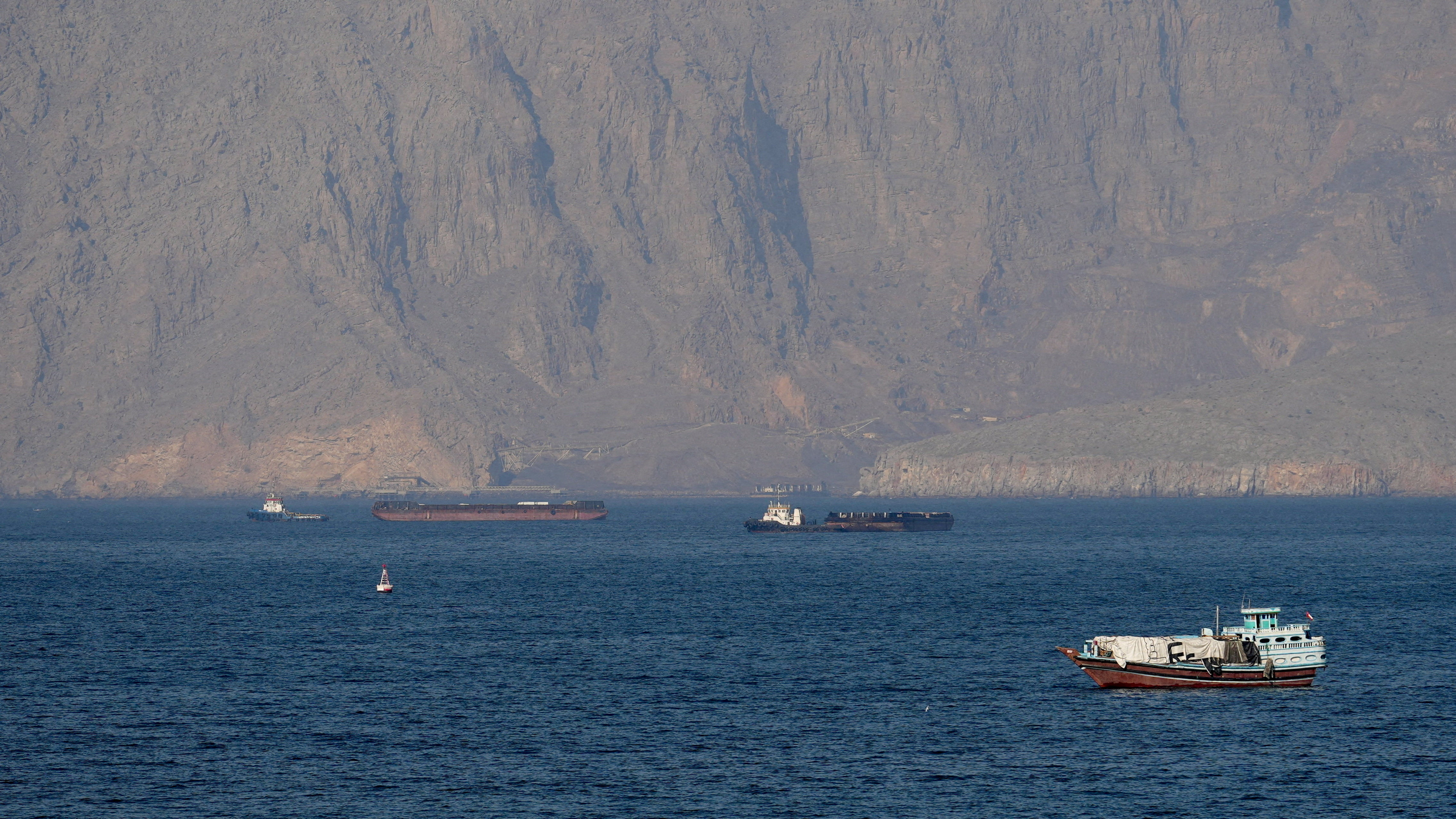
Ships and tankers in the Strait of Hormuz off the coast of Musandam, Oman, April 18, 2026. REUTERS/Stringer//File Photo
Recovery could be slower this time around, per Goldman's strategists. Given the magnitude of oil losses, with far fewer stores to pull from, recovery would "likely require greater demand destruction and renewed inventory draws." Shippers remain risk-averse regarding routes through Omani waters, even as the White House insists the lane is open.
China, the world's largest crude importer, had cushioned the market by drastically reducing its imports by 5 million barrels per day through the first phase of war, but that trend could quickly change as Gulf producers reduce prices and Beijing evaluates its long-term stockpile goals, the Goldman strategists said.
"As confidence in the security of the Strait continues to erode, markets will increasingly need to price in the prospect of more prolonged supply disruptions," Pang added.
Jake Conley is a breaking news reporter covering US equities for Yahoo Finance. Follow him on X at @byjakeconley or email him at jake.conley@yahooinc.com.
Click here for in-depth analysis of the latest stock market news and events moving stock prices
Read the latest financial and business news from Yahoo Finance
Source: “AOL Money”
