


Race to save hundreds of workers trapped in flooded tunnels in Nepal
Race to save hundreds of workers trapped in flooded tunnels in Nepal

Samaan LateefSun, August 30, 2026 at 5:36 PM UTC
0
Rescue workers in Nepal are wading through mounds of debris and mud to find more than 3,000 people still missing after Wednesday’s catastrophic floods.
Poor weather conditions have been hindering the painstaking rescue effort, with perhaps the most complicated mission being extricating the hundreds of workers trapped inside flooded hydropower tunnels.
The Independent Power Producers Association of Nepal said 898 people working on 11 hydropower sites, including some under construction, remained missing.
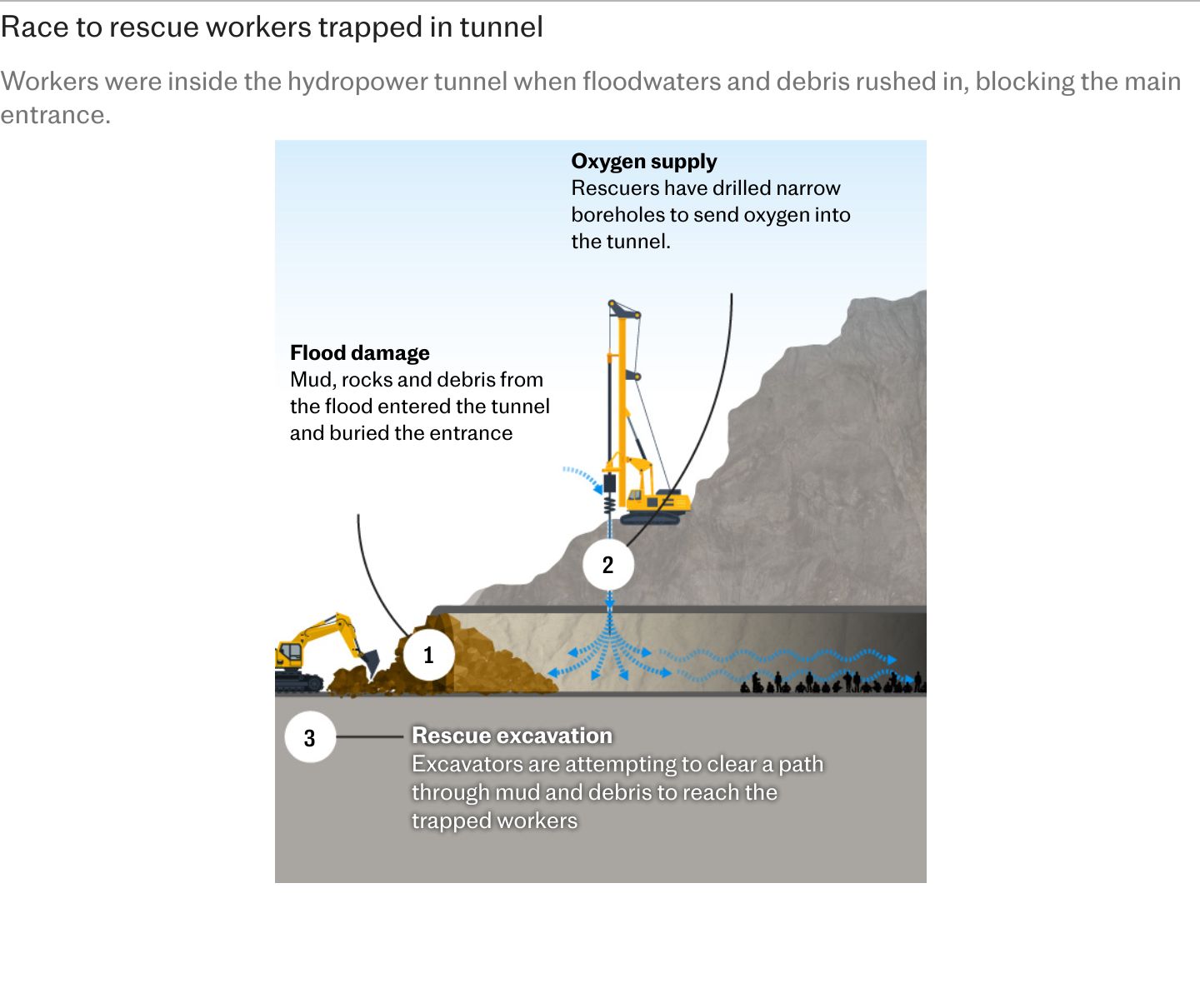
At a tunnel in Trishuli, a manhole was drilled allowing rescuers to abseil.
Rescuers had also begun “sending air” to possible survivors by drilling holes in the tunnel’s façade, said Sudan Gurung, the Nepali home minister.
Crews also sent cameras inside, where around 40 workers were believed to be trapped, to establish whether anyone remained alive.
A visibly empty space had raised hopes that the Upper Trishuli-3B tunnel might not be filled with sludge and debris, officials said.
At the Trishuli 3A hydropower plant, one of the worst-affected sites in Nepal’s Rasuwa district, the rescuers, including engineers from China, penetrated nearly 8m into the tunnel by Sunday afternoon.
The rescue effort resumed after heavy rain and rising river levels forced rescuers to halt work.
“As the floodwaters have receded, the team has resumed efforts to locate the tunnel entrance using drilling machines, excavators, hydraulic cutters and other equipment,” said a Nepal army spokesman on Sunday.
Authorities had requested specialist help from India and China to “fill gaps” in their rescue operations.
The tunnel entrance was found about 8m below a vertical access point, said Shriram Neupane, a regional politician who is involved in the rescue effort. Rescuers estimate they will need to travel around 180m from the portal to reach the suspected worksite.
Advertisement
“The biggest challenge we are facing is that these tunnels lie beneath thick concrete and rock, while floodwater has radically displaced the inlet platforms (plain areas/roads built to enter the tunnel) and altered the surrounding landscape,” Umesh Pattak, an engineer at one of the damaged tunnels, told The Telegraph.
Credit: Facebook/PMO Nepal
But the delay has prompted criticism from relatives and hydropower industry leaders, who say rescuers should have moved faster.
Families said every hour mattered. Hrideshwori Joshi, whose son, Hemant Joshi, 31, an engineer, is believed to be trapped inside the Upper Trishuli-3B Hydropower Project, said she was losing patience.
“It has been four days, and there is no clue about my son. Rescuers should send oxygen immediately into the tunnel,” Ms Joshi said. “I hope he’s still alive inside and will come back to me.”
Mr Joshi, whose father died last year, has worked on the project for three years. His employer says 12 employees are missing after Wednesday’s floods.
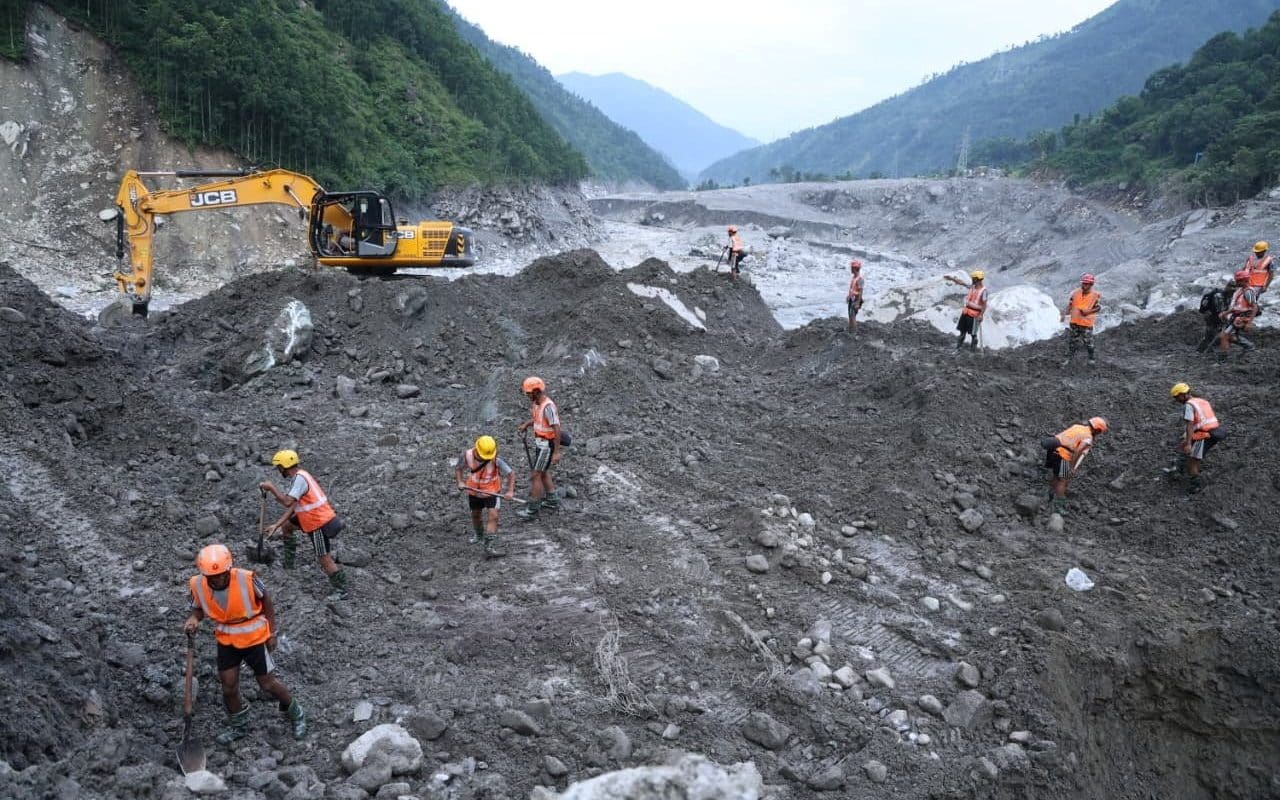
Rescuer workers scour the site of the Trishuli 3A Hydropower Project in Nepal - Nepal Army/via REUTERS
Nepal’s government said that more than 100 workers could still be alive inside several flooded tunnels, with rescue teams concentrating on the Trishuli-3A and 3B projects. But the scale of the destruction in the underground networks remained unclear.
“The rescue operation was so late. Until Saturday, they were waiting to start it. Many lives could have been saved had they started the rescue operations earlier,” Bhim Gautam, chief executive of the Independent Power Producers’ Association, told The Telegraph.
“If there was timely rescue from the areas, some people would have been alive,” he added.
Families have demanded that the government bring in foreign expertise and equipment rather than wait.
Bandhu Tharu believes his parents, Bishnu Tharu and Samjhana Chaudhary, are trapped inside Tunnel No 3 at Haku-216. They entered the tunnel two months ago to work on the hydropower project.
“I’m losing hope about the survival of my parents. They are weak and old. It’s difficult for them to survive in the blocked tunnel,” he said.
“Rescuing the survivors at the last moment and preventing the situation from worsening should have been another important step,” wrote Tharka Bahadur Thapa, a director at the Nepal Electricity Authority, on social media.
Source: “AOL Breaking”
