


Op-Ed: Data center tax would derail Pennsylvania growth
Op-Ed: Data center tax would derail Pennsylvania growth

By Ross Marchand Fri, July 17, 2026 at 3:01 PM UTC
0
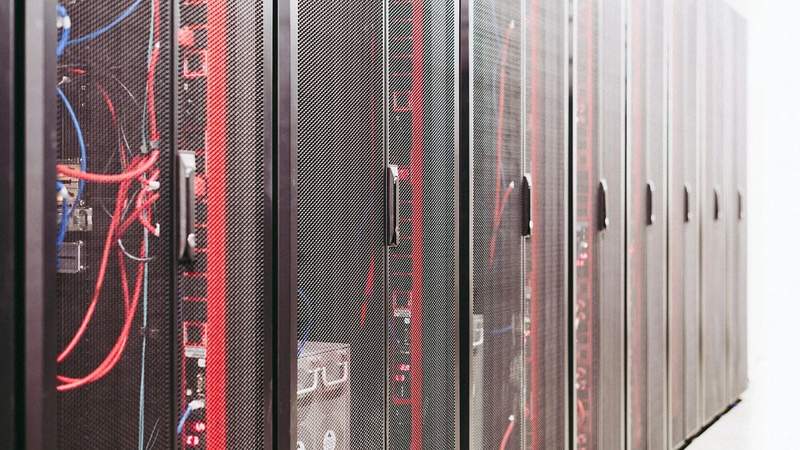
Server racks in a data center. Photo: Brett Sayles / Pexels
Data centers have been a boon to the Keystone State. Estimates suggest that these innovative projects contribute more than $14 billion annually to Pennsylvania’s economy – or more than $1,000 for every Pennsylvania resident. That total will almost certainly climb to $20 billion by 2030.
Despite this digital renaissance, state policymakers are trying to single out data centers for onerous tax treatment. Pennsylvania lawmakers are currently considering HB 2198, which would repeal the sales and use tax exemption for data centers.
While the bill’s sponsors frame the legislation as ending a narrow provision benefitting a maligned industry, repealing the exemption would in fact create an unfair disadvantage for data center projects relative to other economic opportunities.
Furthermore, the rationale for the bill stated in the co-sponsorship memo – that data centers “consume enormous amounts of electricity causing consumer electricity prices to rise” and “consume large quantities of water, potentially affecting local water supplies” – is unfounded.
By rejecting this misguided legislation, Pennsylvania can continue to lead on responsible data center growth.
Enacted in 2021, Pennsylvania's data center sales and use tax exemption for equipment reflects a longstanding principle of sound tax policy: productive business inputs generally should not be subject to sales tax. The Commonwealth already applies this principle across numerous sectors by exempting manufacturing machinery, certain raw materials, and agricultural equipment from sales tax.
These exemptions are not supposed to be special favors; they are designed to prevent tax pyramiding, whereby taxes imposed on intermediate business inputs become embedded in the final price paid by consumers and businesses.
As Tax Foundation Senior Fellow Jared Walczak notes in a guide for policymakers on reforming state sales taxes, “The taxation of intermediate transactions (business inputs) can turn that portion of the sales tax into a tax on production, driving up consumer prices through tax pyramiding and discouraging in-state capital investment.”
He further points out that this practice “is likely to be regressive, as it is concentrated in goods and services consumed disproportionately (as a percentage of income) by lower-income households.”
Advertisement
Data centers rely on servers and related computing equipment in much the same way that a factory relies on industrial machinery. Servers are the productive capital assets that generate cloud computing, data storage, artificial intelligence processing, and countless other digital services used by businesses, governments, and consumers every day.
Taxing this equipment would increase the cost of producing digital services in the same way that taxing assembly-line machinery would increase the cost of manufacturing physical goods. These servers function as the machinery of the digital economy and should be treated consistently with other productive business investments.
Repealing the exemption through HB 2198 would therefore do more than eliminate an incentive – it would depart from Pennsylvania's longstanding policy of exempting productive business inputs from sales tax.
While manufacturers, farmers and other capital-intensive industries would continue to purchase qualifying production equipment without paying sales tax, data centers would become subject to a tax on the very equipment they use to produce their services.
This selective treatment would create tax pyramiding for one industry while preserving protections against it for many others, increasing the cost of investment in digital infrastructure relative to competing sectors of the Commonwealth's economy.
Some lawmakers want to single out data centers for unfavorable tax treatment based on misinformation about the impact of these projects on water and energy resources.
In fact, according to our organization’s recent analysis, data centers accounted for just 0.3% of water consumption in Pennsylvania and 1% of electricity consumption in 2025. These projects have created significant opportunities across the state – including thousands of jobs and billions of dollars in economic output and tax revenue – while consuming minimal natural resources.
Pennsylvania lawmakers must avoid subjecting data centers to onerous tax treatment and keep taxes low and fair for all residents and businesses. Gov. Josh Shapiro recently touted Pennsylvania’s increasingly competitive business climate, and this progress should certainly be celebrated. However, higher and more punitive taxes on this promising sector – which is responsible for billions of dollars in investments and thousands of well-paying jobs – would be a massive step backward.
The data center boom can continue to deliver for Pennsylvania residents – if policymakers permit it.
Source: “AOL Money”
